

Service field guide
Drainage-friendly and permeable pavers where the site can support them.
Permeable pavers can help manage runoff on suitable sites, but they are not a magic drainage fix. Sherwood reviews the soil, slope, base design, overflow route, maintenance expectations, and nearby water sources before recommending permeable or drainage-friendly paving.
Start with the problem
Signs this may be the right scope.
The first step is identifying what you can see, then checking the hidden cause: base movement, poor pitch, weak edges, water, settlement, thresholds, or bad transitions.
You want a paved surface that may reduce runoff compared with a conventional hard surface where the site is suitable
Water sits on or near a driveway, walk, patio, or parking area and the paving system needs to be chosen carefully
A new surface needs to account for low spots, overflow paths, soil conditions, and long-term maintenance before construction
You need to understand whether permeable pavers fit the site or whether grading, conventional pavers, or another drainage approach is more realistic
What the work may include
The finished surface is only the visible part.
Drainage-friendly and permeable paver surfaces for suitable driveways, walkways, patios, parking areas, and low-runoff designs, with base design, soil conditions, slope, overflow paths, maintenance, and municipal constraints reviewed before recommending the system.
Permeable or drainage-friendly paver planning for driveways, walkways, patios, parking areas, and low-runoff exterior surfaces
Site suitability review for slope, soil conditions, runoff sources, overflow paths, and municipal constraints
Open-graded base and joint aggregate planning where a permeable system is appropriate
Coordination with downspouts, edges, thresholds, adjacent pavement, planting beds, and maintenance expectations
Water movement
What can change the scope.
- Sherwood checks whether the site has a practical place for water to enter, store, drain, and overflow during heavy rain
- Soil conditions, slope, base depth, nearby foundations, downspouts, and municipal rules can limit whether permeable pavers make sense
- Permeable systems need maintenance so joints do not clog and runoff performance does not decline
- Overflow paths should be identified early so the surface does not create pooling or send water toward a structure
Before it is covered
What good prep should make clear.
- The recommendation explains why permeable or drainage-friendly paving does or does not fit the site
- Base design, joint material, slope, overflow route, and maintenance expectations are discussed before installation
- The surface is planned as part of a runoff strategy, not sold as a total stormwater correction
- TODO add verified permeable paver project proof
Project
Related project examples.
See how this kind of work appears in real site conditions, prep details, and finished results.
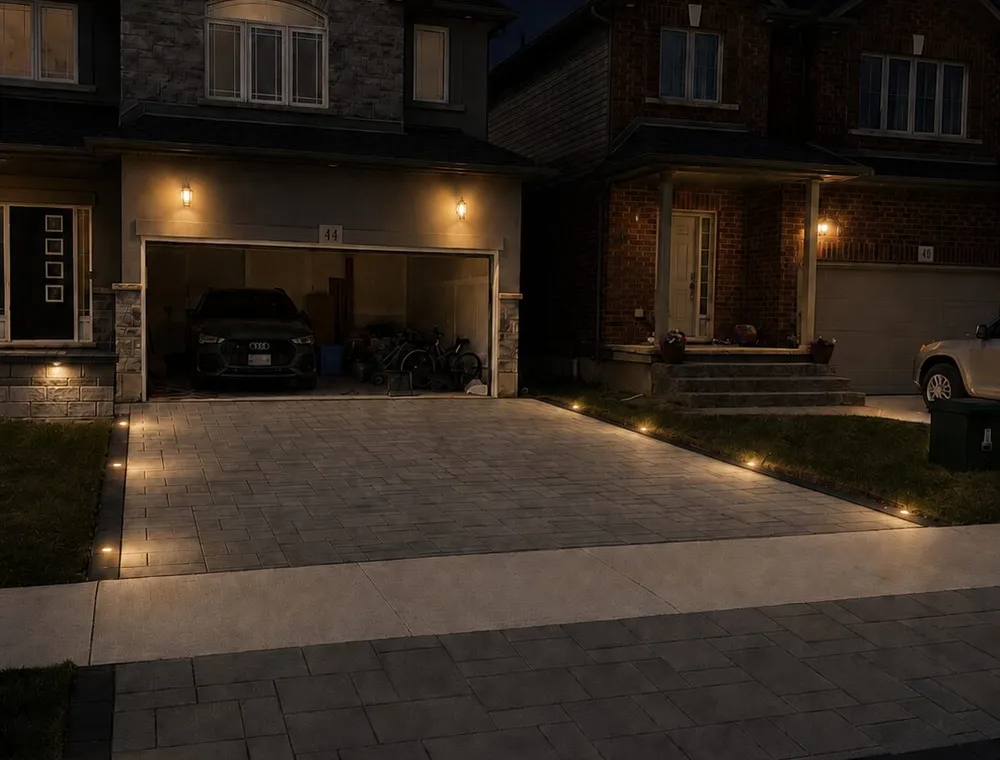
Front Overhaul
A beautiful, complete front makeover
Built-right detail: TODO document observed runoff paths
View projectContact me later
Send the problem, location, and a few photos
Leave a phone or email and your availability.