
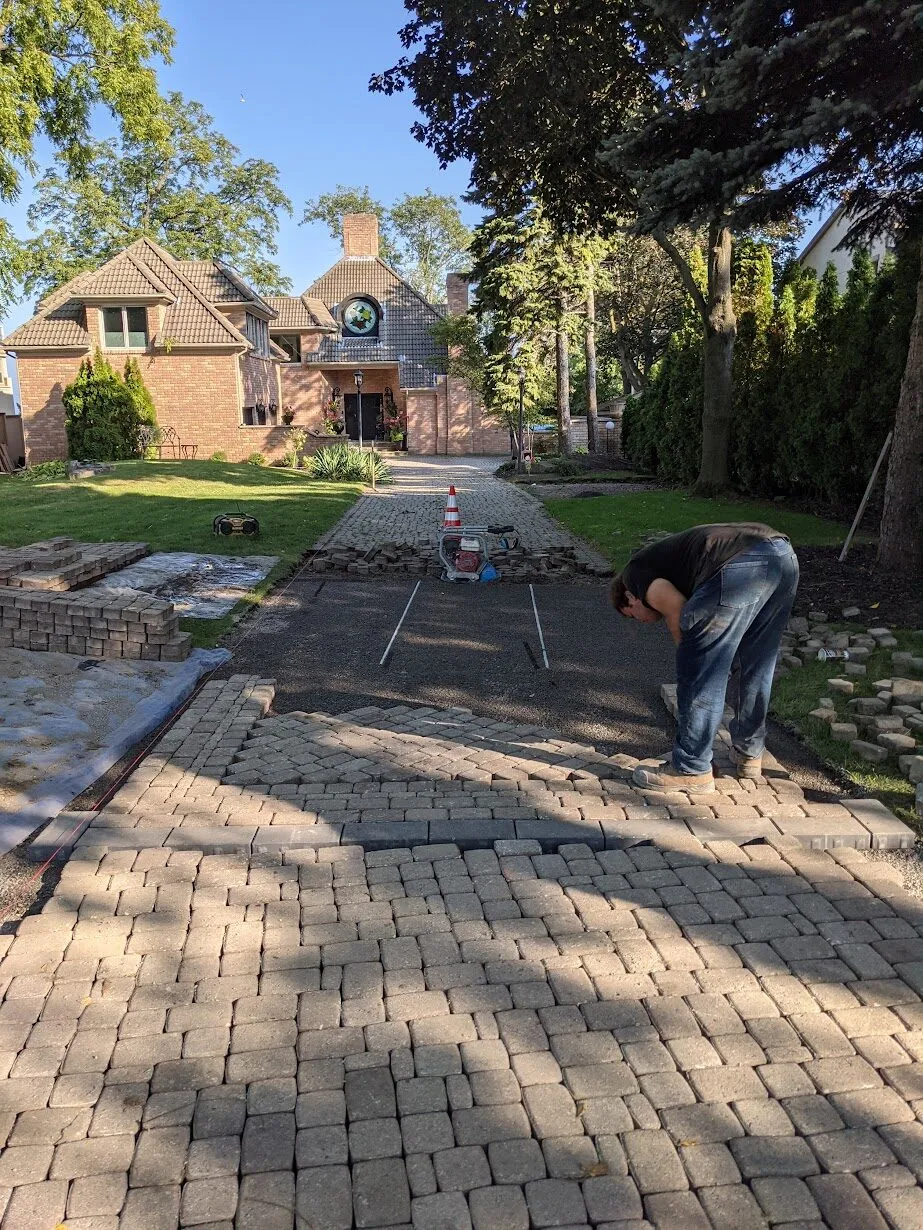
Service field guide
Interlock repair for pavers that have sunk, shifted, spread, or come loose.
If pavers are sinking, rocking, separating, or collecting weeds, the visible surface is usually only part of the problem. Sherwood looks at why the pavers moved, including base failure, edge restraint, pitch, settlement, traffic, and nearby water, before recommending a repair or replacement path.
Start with the problem
Signs this may be the right scope.
The first step is identifying what you can see, then checking the hidden cause: base movement, poor pitch, weak edges, water, settlement, thresholds, or bad transitions.
Pavers are sinking, rocking, loose, uneven, separating, or holding water
Edges are spreading, joints are washing out, weeds are taking over, or borders no longer hold the pattern
A patio, walkway, driveway, or entrance has trip points, low spots, safety hazards, or other awkward transitions
You need to know whether the surface can be lifted and relaid or whether the failed base makes a fuller rebuild more practical
Service process
How this service usually progresses.
The exact scope depends on the site, but durable work usually follows a visible sequence: assessment, preparation, installation, and finishing.
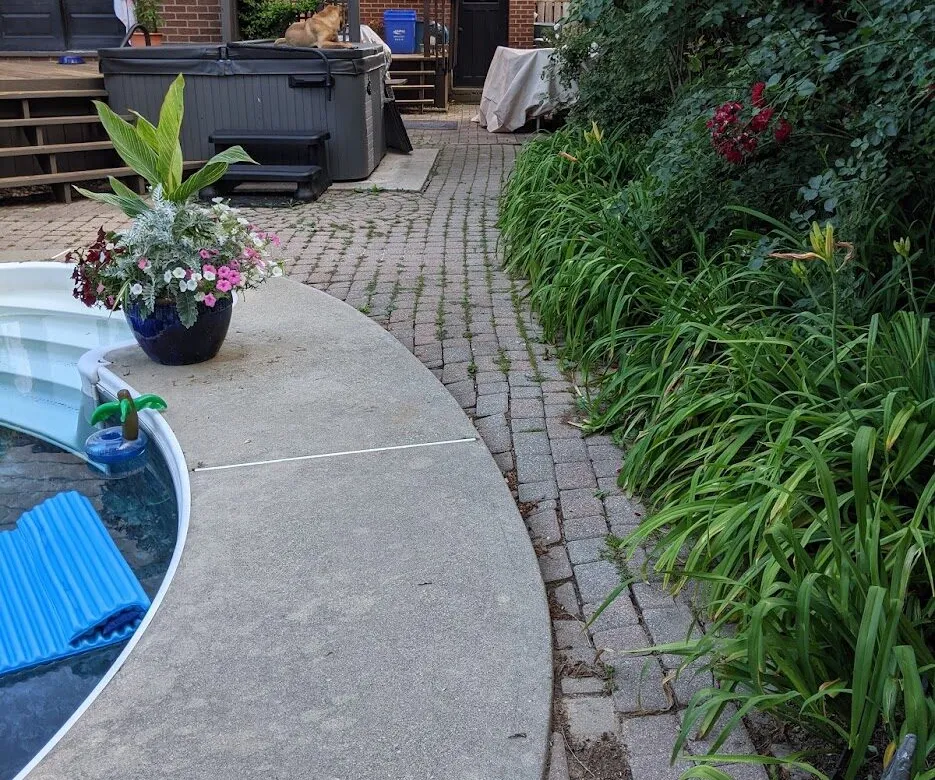
Assess
Ready for an uplifting
- We always measure drainage, and resolve any reasons behind shifting and sinking
- Now's a good time to decide on extensions or new pavers
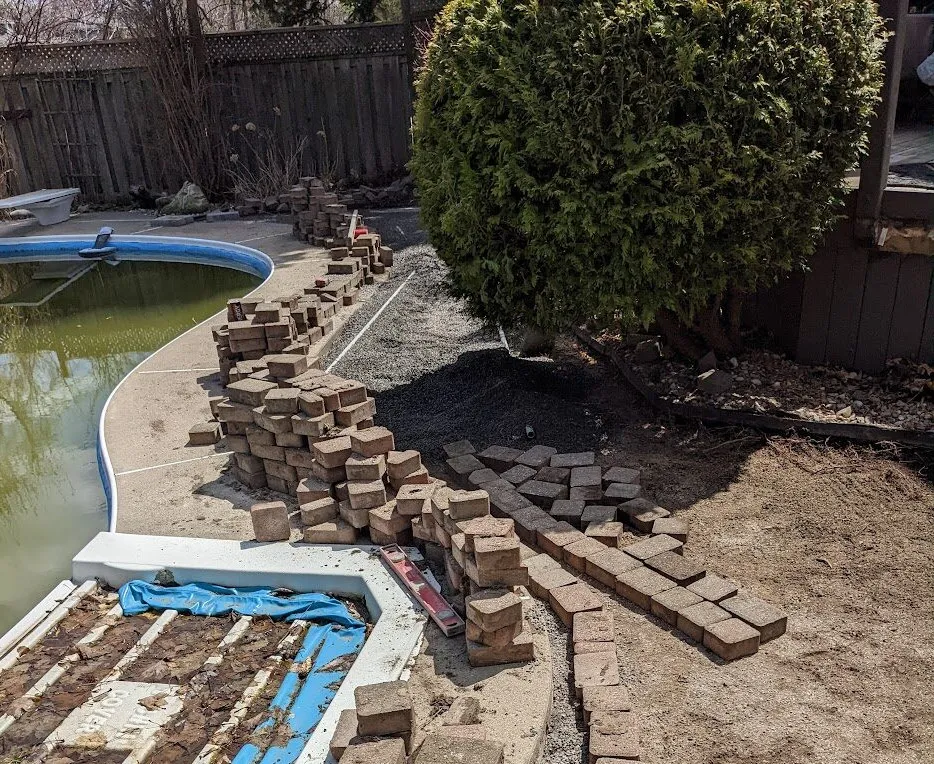
Lift
Clean & relocate current pavers
- To ensure exact replication, pavers are sometimes relocated with the same pattern, marked, or photographed
- Re-used pavers are cleaned with a power-washer to bring back color and remove any adhered material
- Otherwise, pavers are recycled
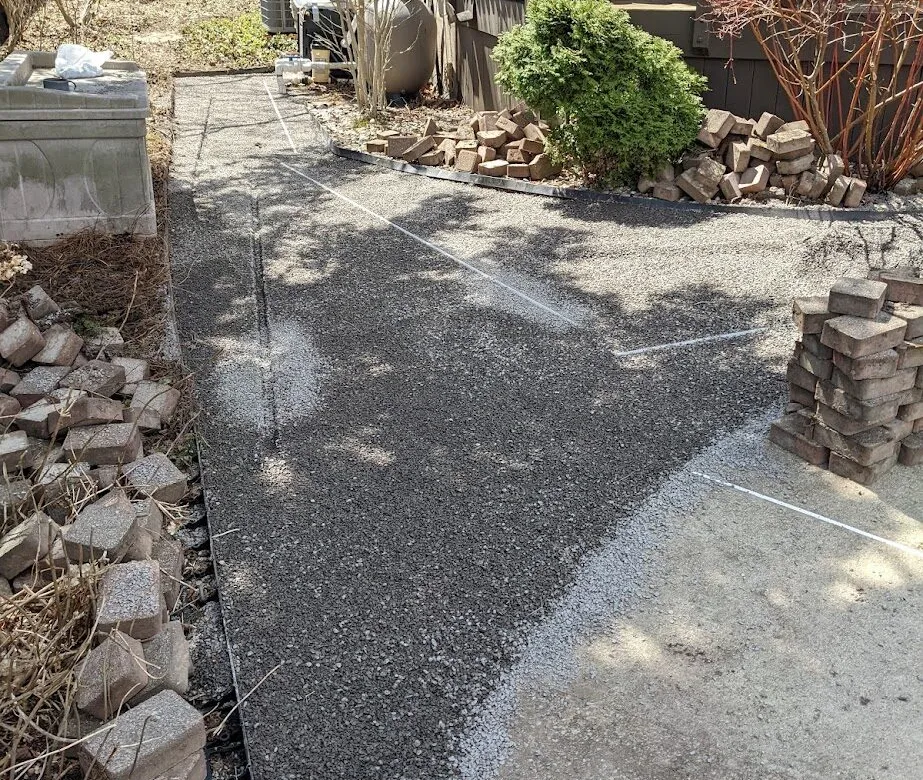
Reset
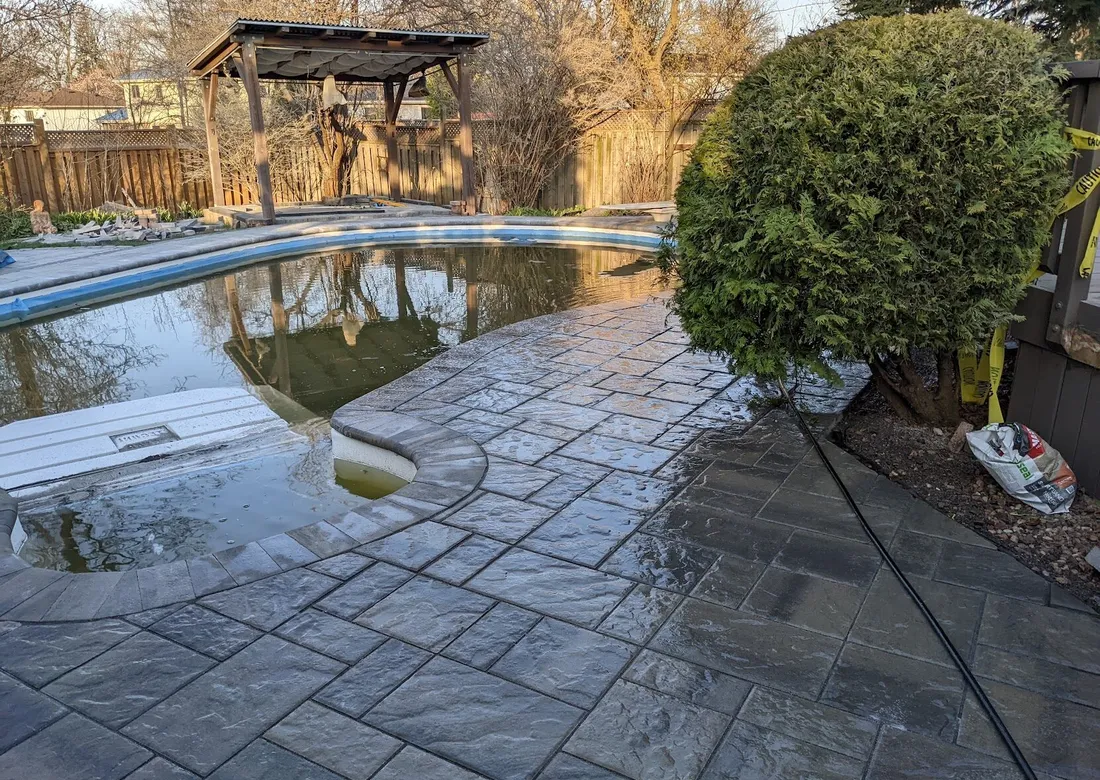
Correct base, bedding, edges, and grade
- Base is corrected with additional crusher run and finalized with high-performance bedding
- Bars are used to set a consistent, mechanical, measureable grade to guarantee a smooth surface and effective drainage
Lay
Lay, joint, compact, and clean
- Lay stones in predetermined or new pattern
- Install new polymeric sand to prevent weeds and water from penetrating
- Water the complete area down to activate polymeric sand and check for pooling
Worth considering while the site is open
Smart upgrades before the work is closed in.
Some improvements are easier, cleaner, and more cost-effective to handle while the area is already being excavated, rebuilt, or finished.
Cleaning and sealing after repair
Once loose or settled areas are corrected, cleaning and sealing may help the repaired area blend with the surrounding pavers, reduce staining, and make routine maintenance easier. Sealed pavers still need periodic review and re-sealing based on exposure and use.
Fixing the cause of settlement
If water, weak edges, low spots, or downspouts contributed to the movement, it may be smarter to correct those conditions while pavers are already lifted instead of resetting the surface over the same problem.
Adjacent restoration or layout upgrades
If nearby borders, landings, walkways, or patio areas are also failing, it may be cleaner to restore a larger area while the crew is mobilized. Older layouts can also be updated with new borders, accents, or replacement pavers where matching is difficult.
Project
Related project examples.
See how this kind of work appears in real site conditions, prep details, and finished results.
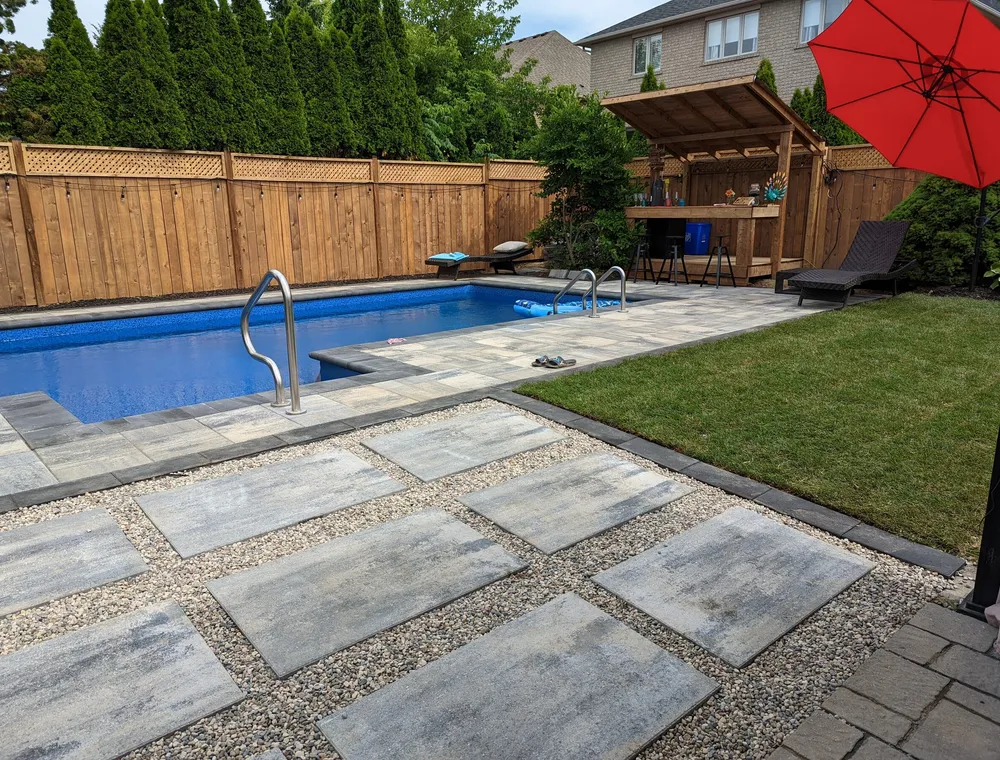
'Tiki' Interlock Pool Installation
A blank grass yard became a usable pool area with interlock, stepping stones, drainage planning, and clearer routes around the backyard.
View project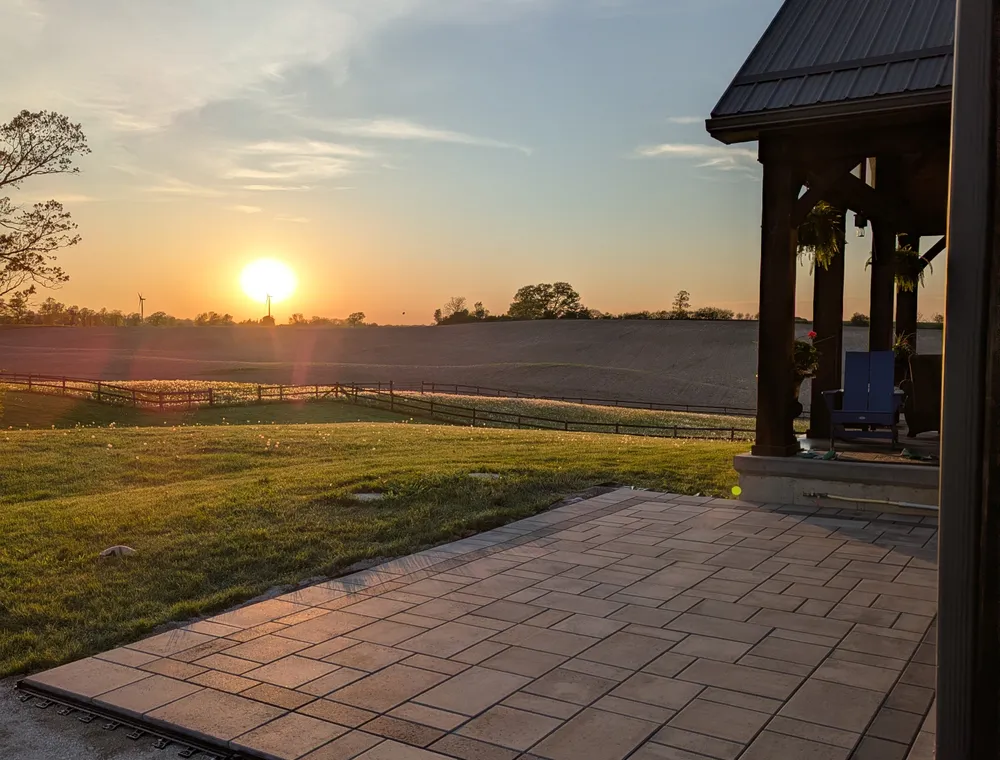
'Sunset' Patio Installation
A sloped grass area became a more usable patio for BBQs, seating, and sunset views, with the layout adapted around shallow utility constraints.
View projectStart the conversation
Start with what you see.
No measurements, material choices, or finished plan needed. Leave a way to reach you and we’ll take it from there.
Project start
Leave a way to reach you.
Choose how we should follow up. A short note is plenty.