
Service field guide
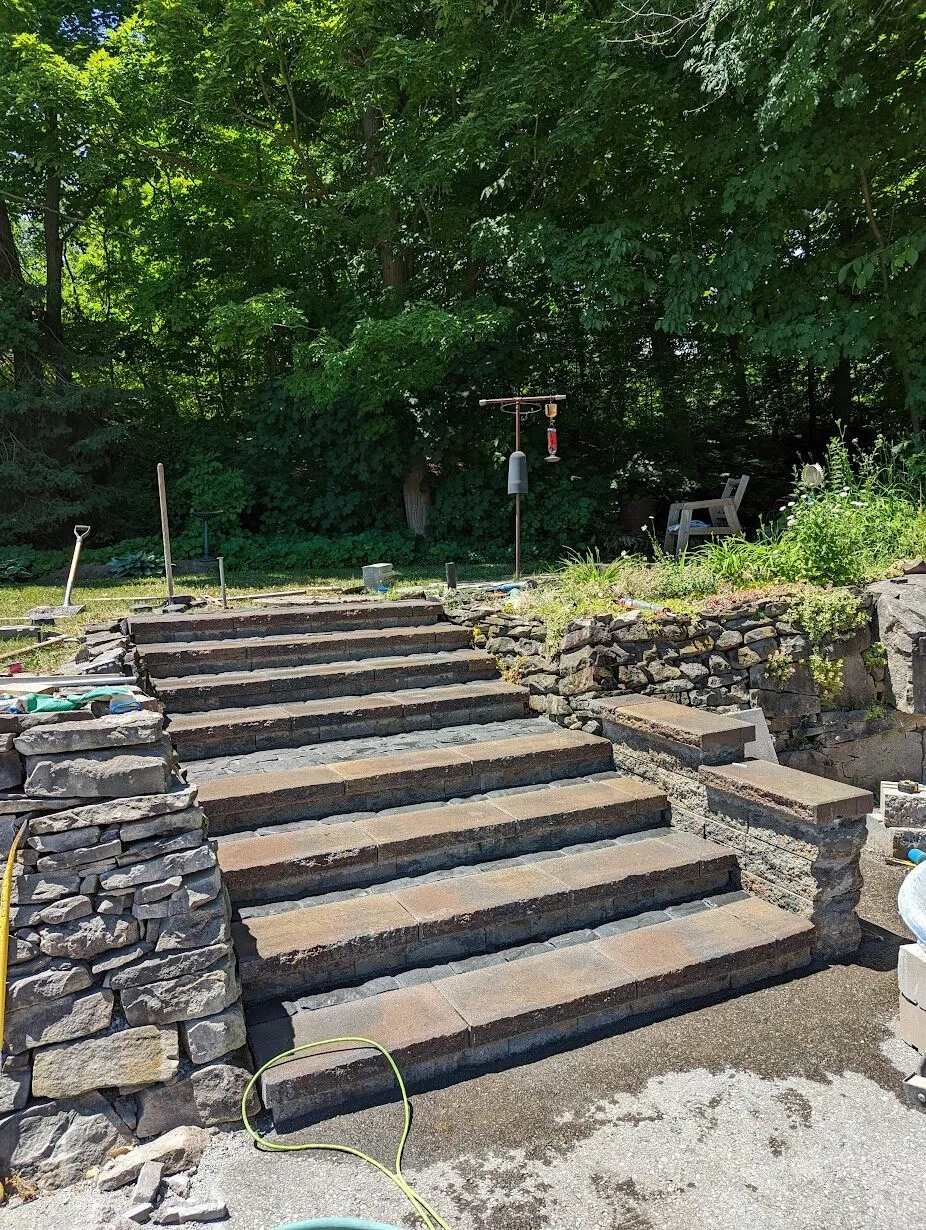
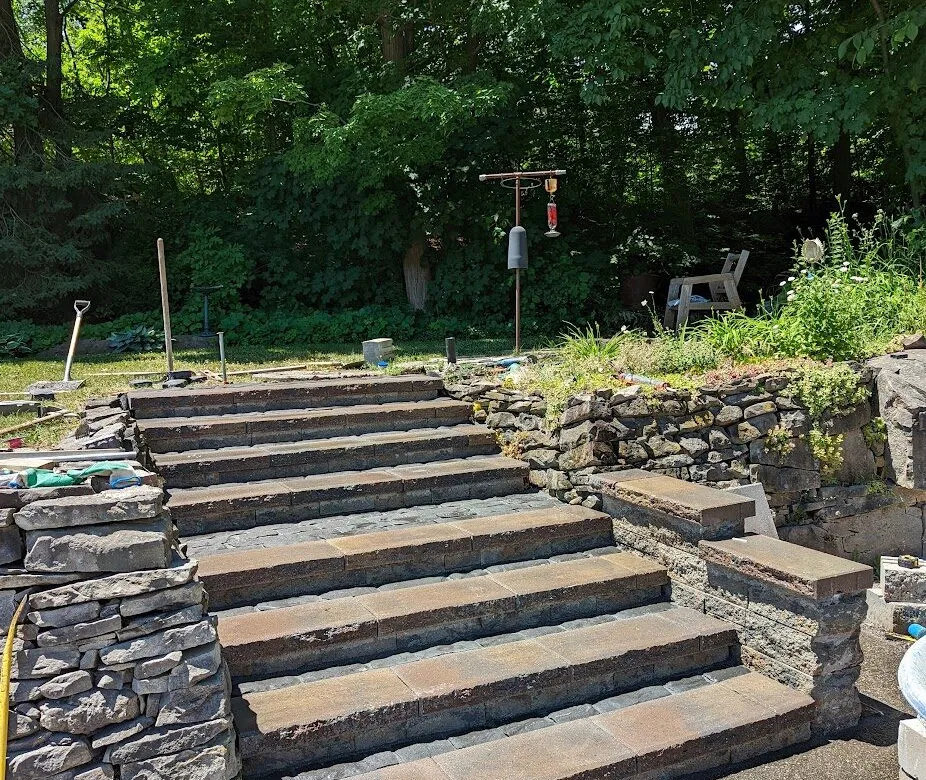
Stone steps and landings planned for stable footing and clean tie-ins.
Outdoor steps usually feel wrong for a reason: uneven rise, short treads, loose stones, a missing landing, poor connection to the walk, or water sitting where people step. Sherwood reviews the level change, base, edges, landing size, and drainage before recommending repair or replacement.
Start with the problem
Signs this may be the right scope.
The first step is identifying what you can see, then checking the hidden cause: base movement, poor pitch, weak edges, water, settlement, thresholds, or bad transitions.
Steps have uneven rise or run, loose stones, rocking treads, or awkward footing
A landing is missing, too small, sloped the wrong way, or disconnected from the walkway
The step area does not tie cleanly into the porch, driveway, patio, slope, or front walk
Water sits on treads, freezes in shaded areas, or collects near the door threshold
Service process
How this service usually progresses.
The exact scope depends on the site, but durable work usually follows a visible sequence: assessment, preparation, installation, and finishing.
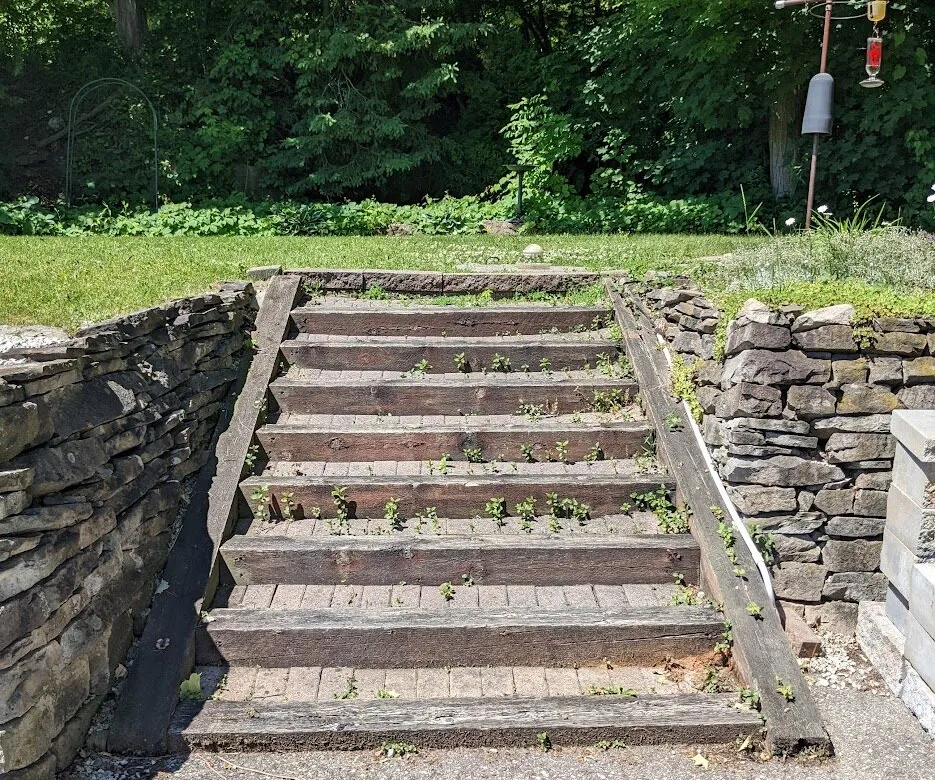
Assess
Measure rise, run, landings, and water
- Check tread depth, rise consistency, and landing size
- Review where water sits or freezes
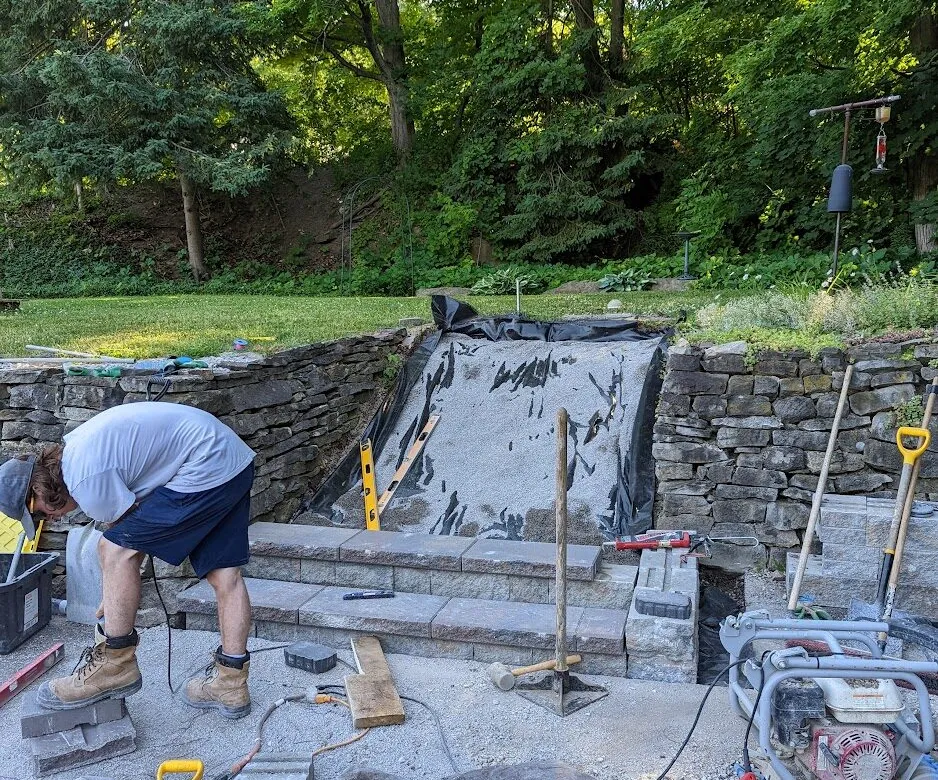
Prepare
Open the step area and base
- Prepare support below treads and landings
- Coordinate tie-ins to walks, porches, and grades
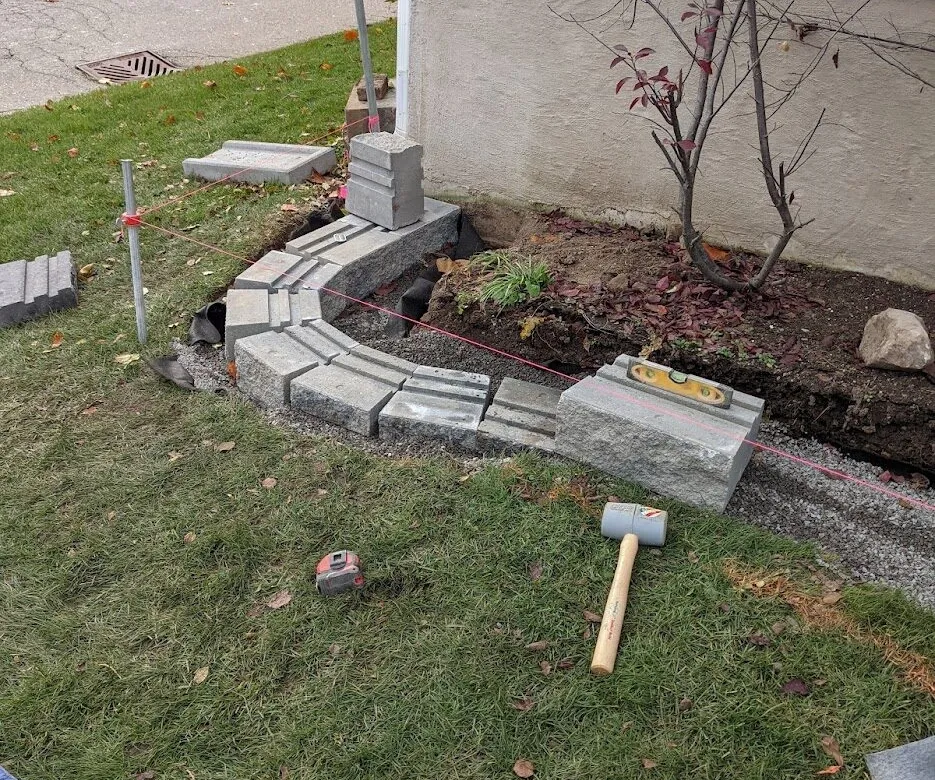
Set
Install steps, edges, and surrounding surface
- Set stones or pavers on stable support
- Keep transitions consistent and readable
Review
Finish joints, cleanup, and footing check
- Review step comfort and landing transitions
- Check nearby grades and runoff paths
Worth considering while the site is open
Smart upgrades before the work is closed in.
Some improvements are easier, cleaner, and more cost-effective to handle while the area is already being excavated, rebuilt, or finished.
Lighting for step visibility
If steps, landings, entrances, or nearby walks are being rebuilt, this is a clean time to plan low-voltage lighting so tread edges and level changes are easier to read after dark.
Larger landings and matching entrance work
A step repair may be the right moment to enlarge a cramped landing, improve the walkway connection, update the entrance border, or make the front approach feel more deliberate.
Water redirection where ice forms
If downspouts, shade, or nearby grades send water across treads or landings, Sherwood can review redirection options while the area is open so the new steps are not placed back into the same wet or icy pattern.
Sealing where the material allows
Depending on the selected stone or paver system, sealing may help with appearance and routine cleaning. The right product and timing should match the material, exposure, and maintenance expectations.
Project
Related project examples.
See how this kind of work appears in real site conditions, prep details, and finished results.
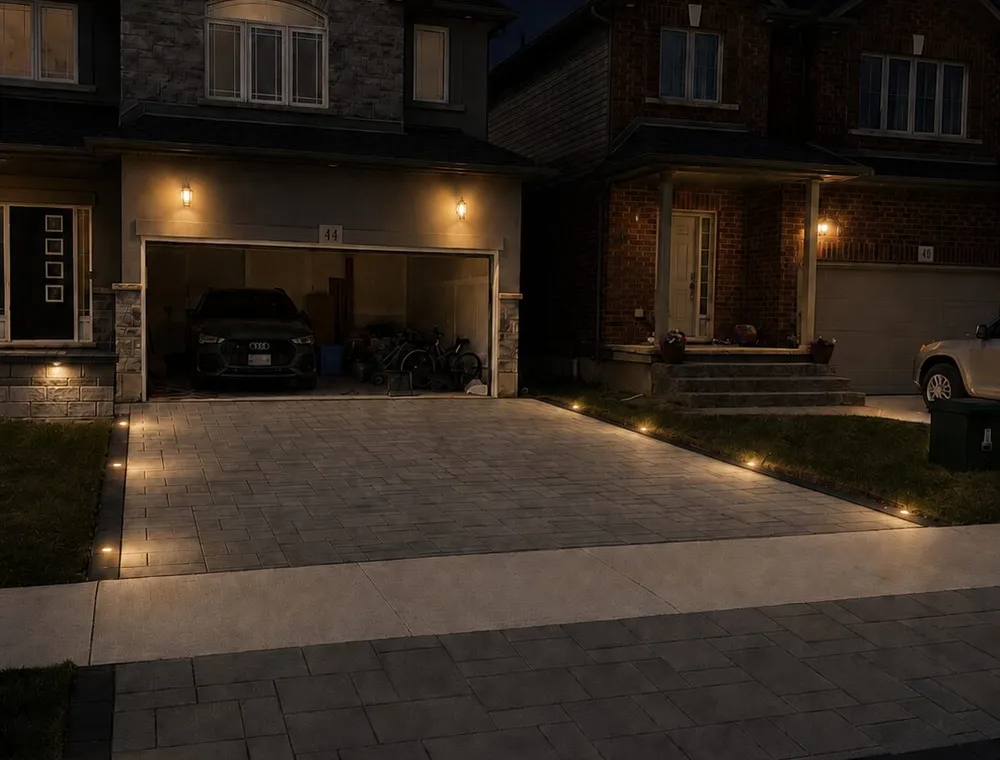
'I'm Home' Interlock Driveway Installation
A new-build front entrance was turned into a more finished arrival area with driveway pavers, steps, wall details, lighting, overlay work, and sealing.
View project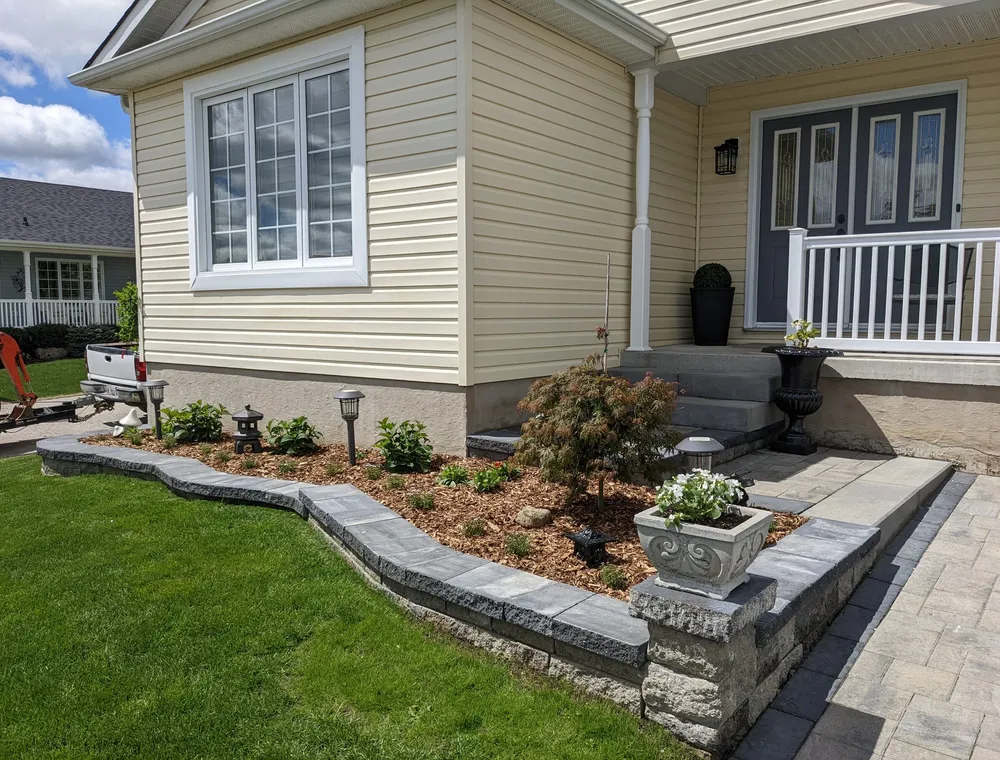
'Pastel De Nata' Complete Interlock Installation
A loose, uneven front walk and step area was rebuilt into a more stable entrance with steps, landing, driveway extension, and a garden wall.
View projectStart the conversation
Start with what you see.
No measurements, material choices, or finished plan needed. Leave a way to reach you and we’ll take it from there.
Project start
Leave a way to reach you.
Choose how we should follow up. A short note is plenty.