
Service field guide
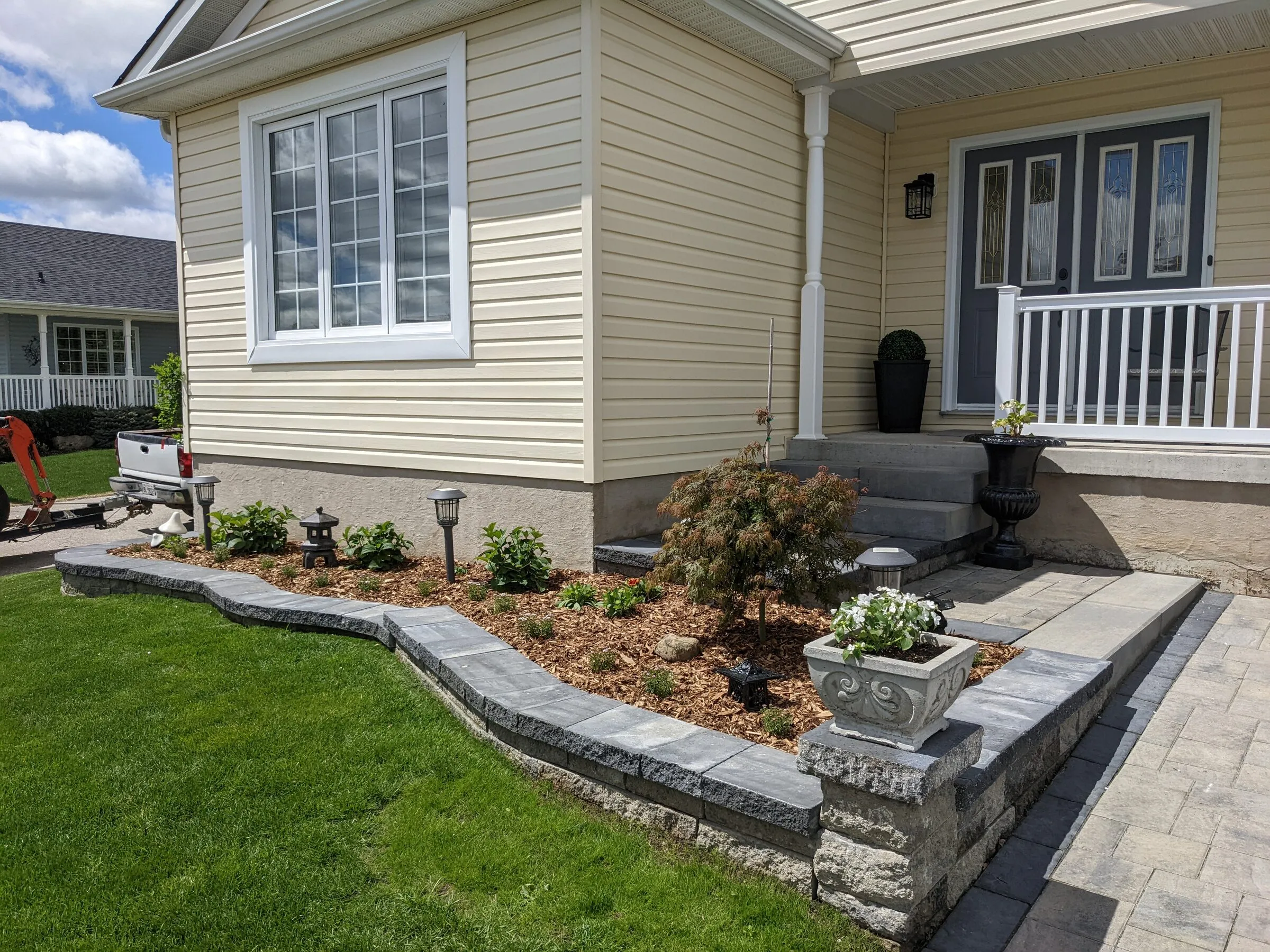
Patios, walkways, and front entrances planned around how the space is actually used.
A patio can be too tight for furniture, a front walk can push guests across the grass, and an entrance landing can feel unsafe because it is undersized or poorly tied into the driveway. Sherwood plans the route, size, height, pitch, and base before the finished pavers are chosen.
Start with the problem
Signs this may be the right scope.
The first step is identifying what you can see, then checking the hidden cause: base movement, poor pitch, weak edges, water, settlement, thresholds, or bad transitions.
The patio is too small for furniture, too chopped up to use comfortably, or poorly connected to the house and yard
Guests cut across grass because the walkway route is unclear, narrow, dated, uneven, or disconnected from the driveway
A side path is muddy, awkward, or hard to maintain
The entrance landing is undersized, poorly tied into the walk, or collects water and ice near the threshold
Service process
How this service usually progresses.
The exact scope depends on the site, but durable work usually follows a visible sequence: assessment, preparation, installation, and finishing.
Assess
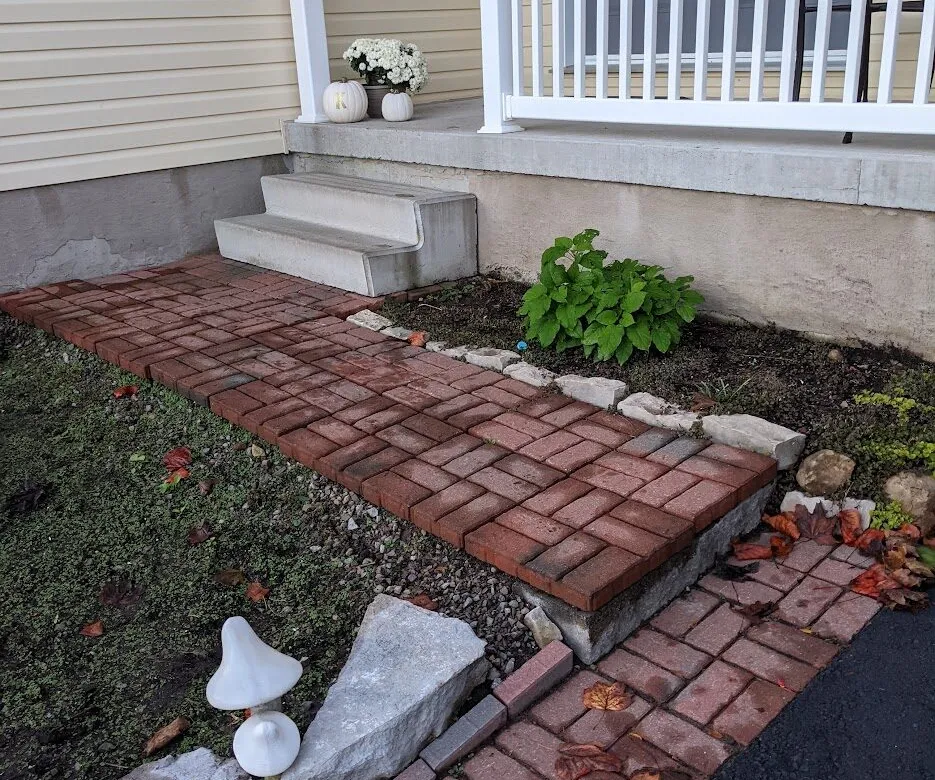
Confirm routes, sizes, and thresholds
- Review how people move through the space
- Identify current aesthetics and mood
- Identify the invariants of the property: steps, lines, gardens, etc
Design
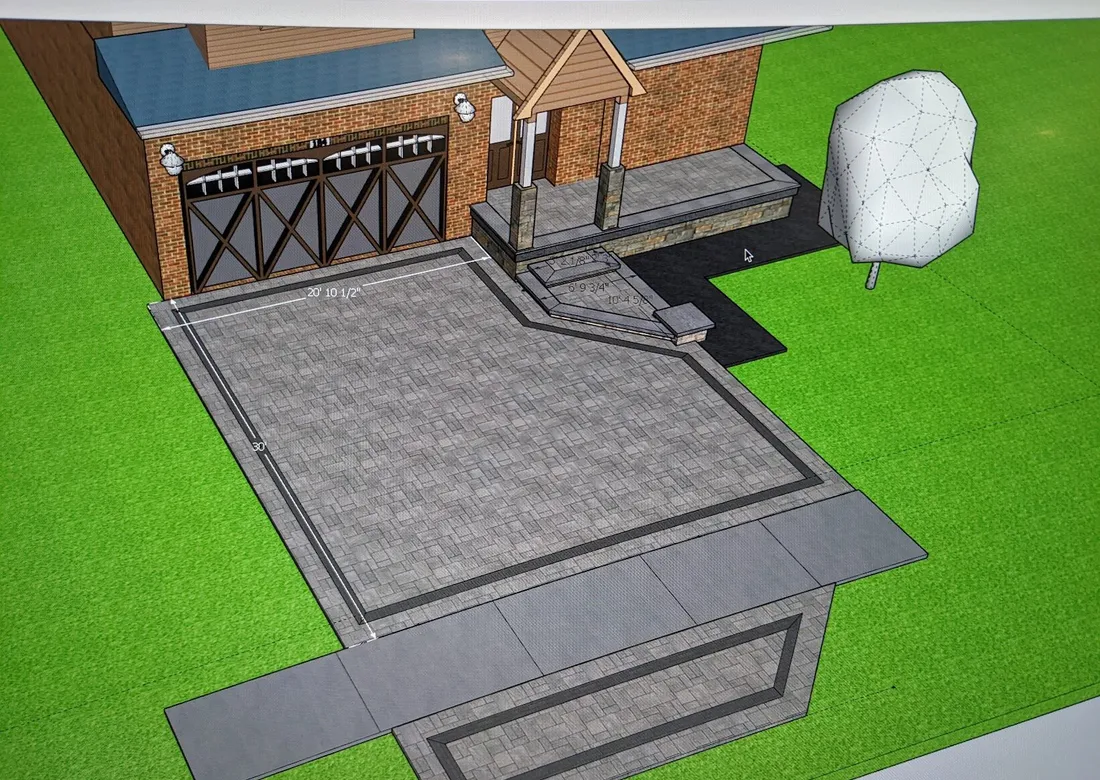
Visualize before you commit
- For certain sized projects, we offer free designs that are to-spec. No discrepencies, no misalignments
- Feel free to ask for a design
Build
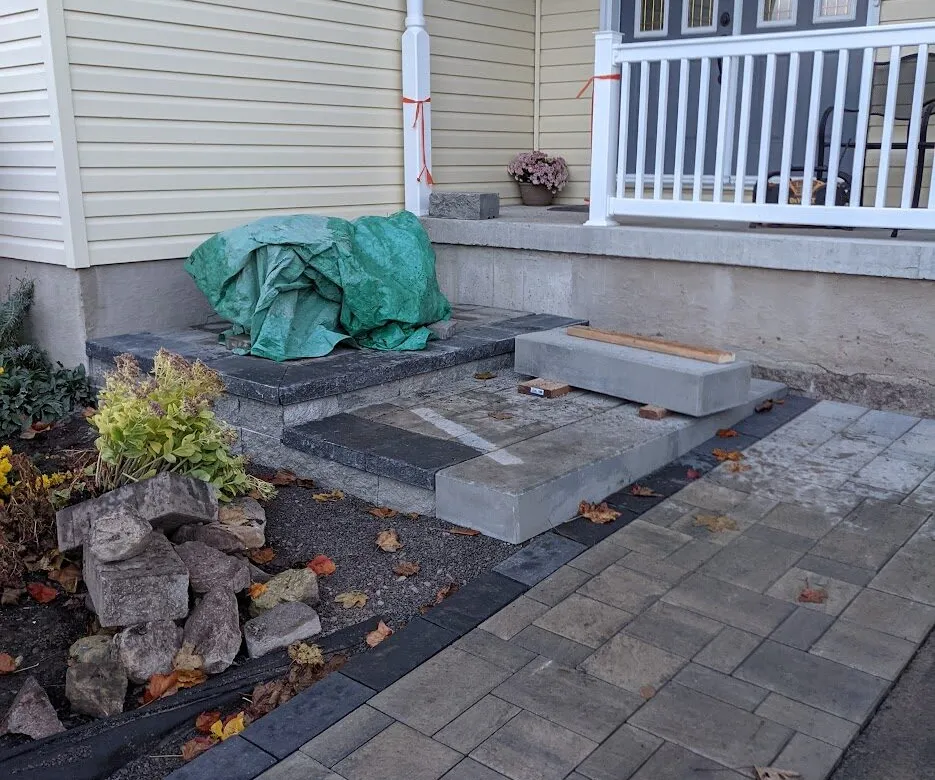
Build what's important first
- Ensure that critical areas are available as soon as possible
- Potential trip areas are always taped off for safety
Build
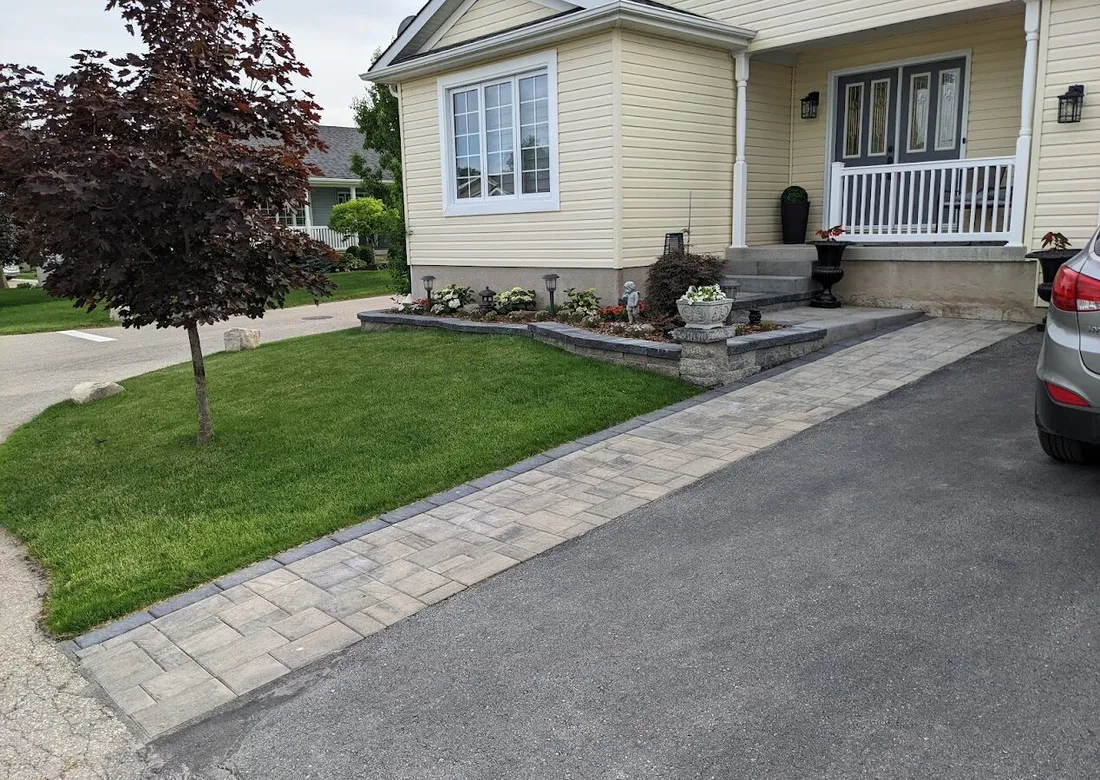
Focus on making your property beautiful, and functional
- More space, safer steps, and preventing trip hazards are great reasons to start. We make sure that any job is equally functional as it is beautiful
- Driveway extensions are a very common request, and are surprisingly affordable
Magic
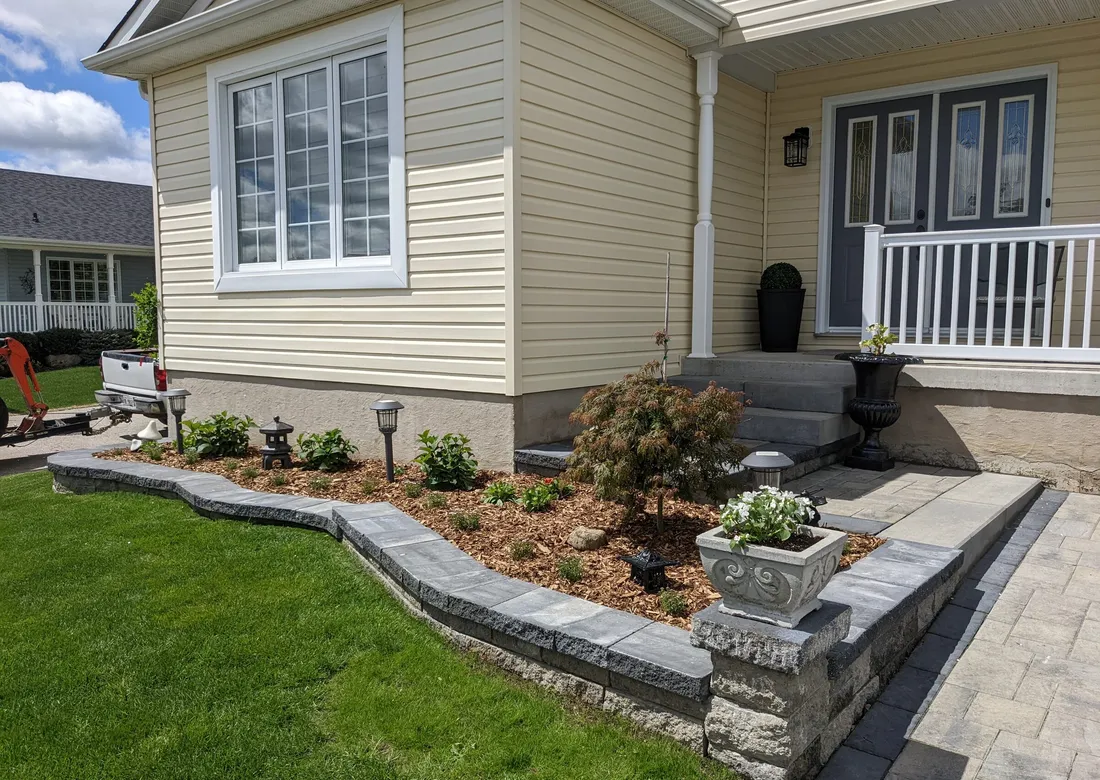
Make it feel like home
- Add the final touches that change it from a construction site, back to your home
Worth considering while the site is open
Smart upgrades before the work is closed in.
Some improvements are easier, cleaner, and more cost-effective to handle while the area is already being excavated, rebuilt, or finished.
Sealing for paver patios and walks
Sealing can help retain, enhance, and protect the appearance of new or restored pavers. It may deepen colour, reduce staining, and make routine cleaning easier, with re-sealing typically reviewed every 3–5 years depending on exposure, use, product type, and site conditions.
Lighting for paths, entrances, and patio edges
If paths, entrances, patio edges, steps, or landings are being rebuilt, this is a clean time to plan low-voltage lighting, fixture locations, conduit paths, and transformer placement before the hardscape is closed in.
Wider routes, larger landings, and accent edges
Before the layout is set, consider whether the walkway should be widened, the patio enlarged, the entrance landing improved, or accent borders and garden-wall edges added while the surrounding area is already open.
Drainage and downspout burial near everyday routes
Entrances and walkways are frustrating places for runoff and ice. While the area is open, Sherwood can review downspout burial, water redirection, and grading changes that may help move water away from doors, walks, patios, and low spots.
Project
Related project examples.
See how this kind of work appears in real site conditions, prep details, and finished results.
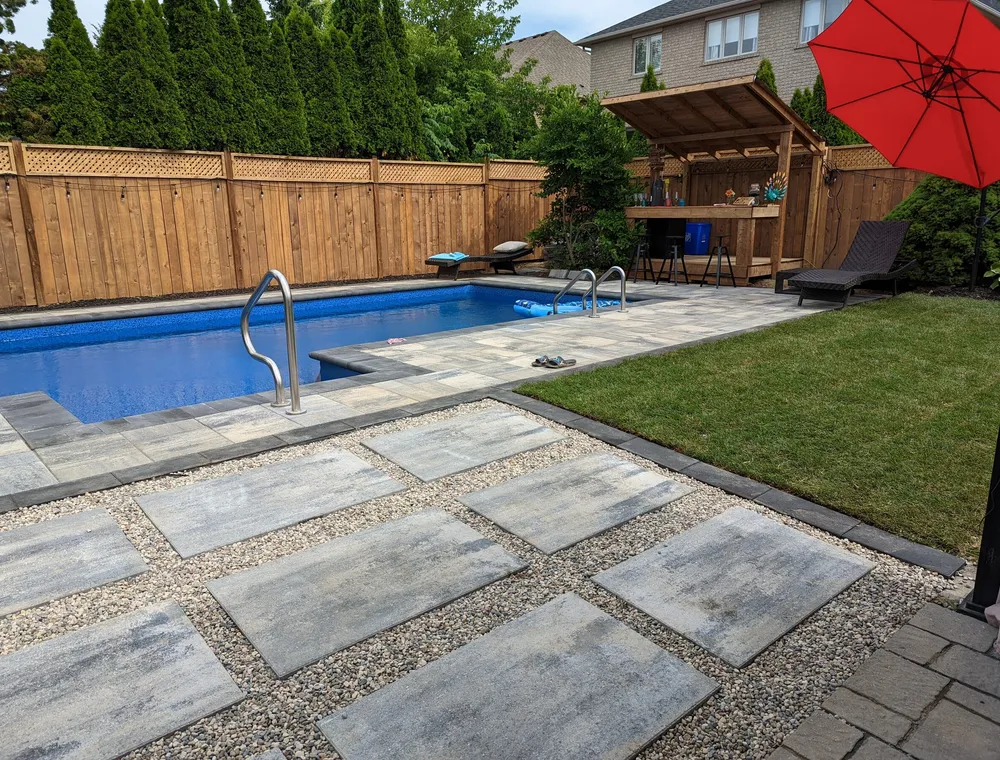
'Tiki' Interlock Pool Installation
A blank grass yard became a usable pool area with interlock, stepping stones, drainage planning, and clearer routes around the backyard.
View project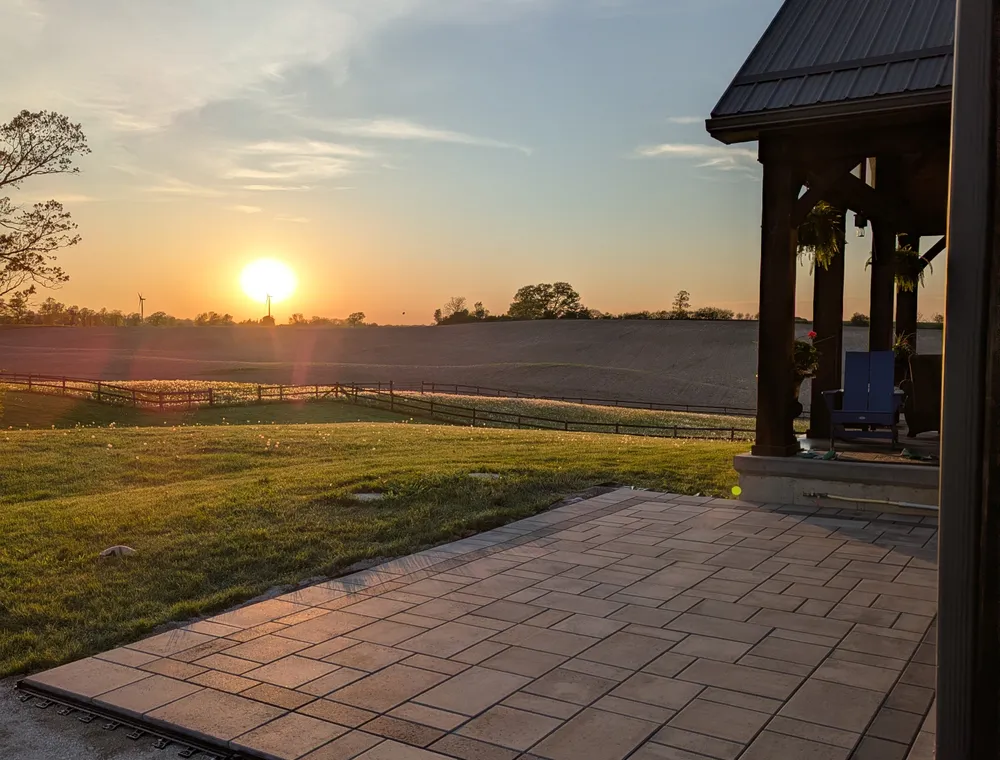
'Sunset' Patio Installation
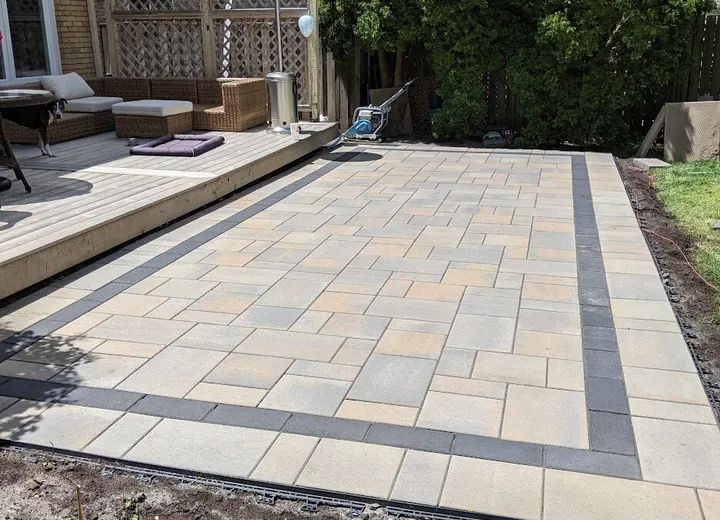
A sloped grass area became a more usable patio for BBQs, seating, and sunset views, with the layout adapted around shallow utility constraints.
View project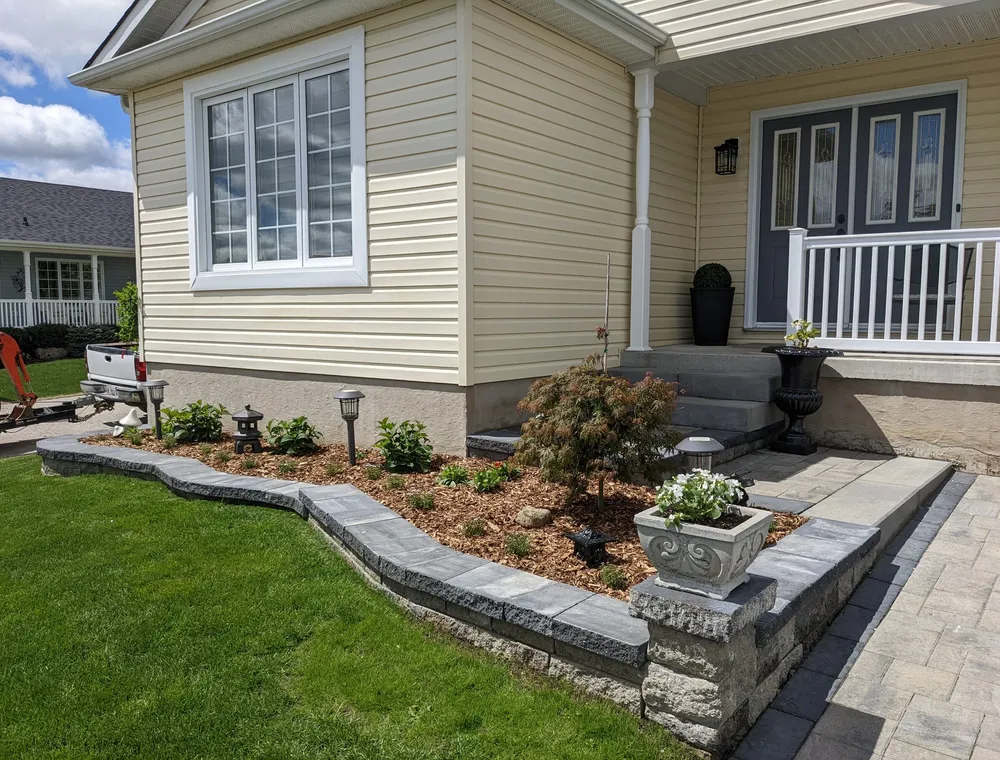
'Pastel De Nata' Complete Interlock Installation
A loose, uneven front walk and step area was rebuilt into a more stable entrance with steps, landing, driveway extension, and a garden wall.
View projectStart the conversation
Start with what you see.
No measurements, material choices, or finished plan needed. Leave a way to reach you and we’ll take it from there.
Project start
Leave a way to reach you.
Choose how we should follow up. A short note is plenty.